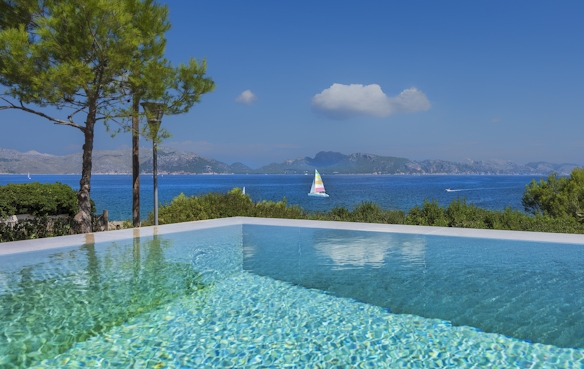
I met Geri a few years ago in Barcelona while we were both studying, and we connected through mutual friends. As a Mallorcan, Geri was raised in Selva, a small town in the foothills of the Tramuntana. He describes himself as "a mountain and sports person" at heart, and this is evident in every recommendation he makes. When I asked him for his take on Mallorca, what came back was less a list of suggestions and more a portrait of the island he grew up in. That message became this guide.
Mallorca
Mallorca, Through Local Eyes: An insider's guide to the island
The most useful travel advice rarely comes from a guidebook. It comes from a local.

Mallorca’s natural beauty from cliffs to sea
The Mountains
"One of the best things about Mallorca is the Serra de Tramuntana mountain range." The Serra de Tramuntana runs the length of the island's northwest coast, a limestone mountain range that drops sharply into the Mediterranean on one side and descends into olive groves and quiet villages on the other. The hiking here is world-class. Around Pollença, there are routes for every level of ambition:
Puig de Maria, a relatively gentle climb that rewards you with panoramic views from a fourteenth-century monastery at the summit, or longer, more committed trails deeper into the Tramuntana foothills.
One route he singled out begins at the Cúber reservoir, climbs towards Puig Major, the island's highest peak, and descends towards Pollença. It is long, he warned, but it can be broken into shorter sections. He recommends the Wikiloc app for planning.

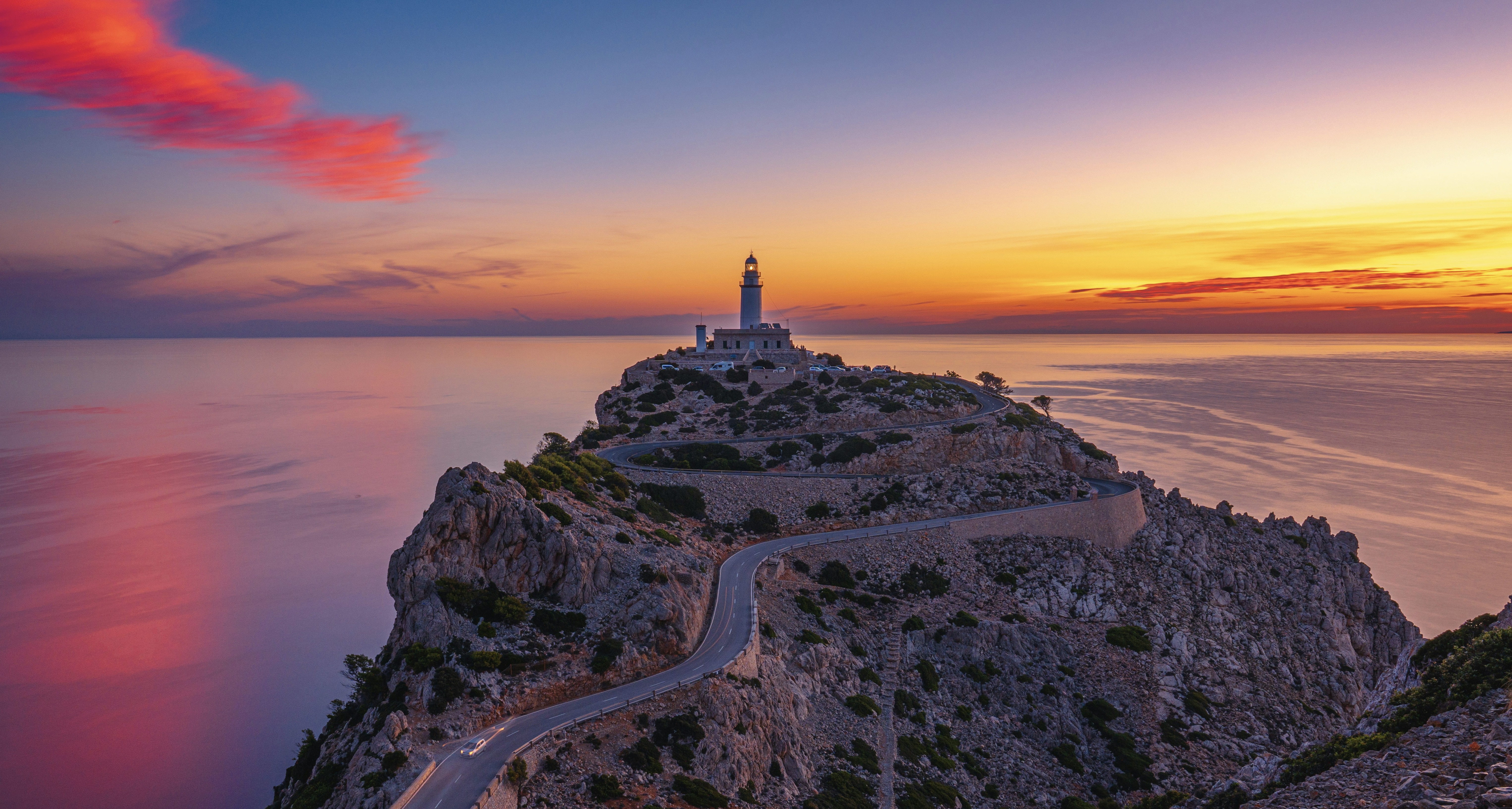
A serpentine road cutting through Mallorca’s wild terrain
On Two Wheels
Mallorca is also one of Europe's most respected cycling destinations. Professional teams train here through the winter and spring, and for good reason. The roads are well-maintained, the gradients vary, and the scenery is difficult to beat. According to Geri, three rides are worth knowing about:
Coll de Femenia, a classic climb from Pollença into the heart of the Tramuntana, steady, beautiful, and quiet once you leave the valley floor.
Sa Calobra, perhaps the most famous cycling road on the island, is a serpentine descent (and punishing return climb) through dramatic gorge scenery, ending at a small cove where the mountains meet the sea.
Cap de Formentor, the narrow peninsula at Mallorca's northern tip, is best ridden at sunrise, when the coastal views make you stop pedalling and simply stand there for a moment.
If you are staying in Port de Pollença or Alcúdia, all three routes are within easy reach.

Sunset cycle along the Mallorcan coast
The Beaches
Alcúdia is one of those rare places that seems to get everything right. The beach stretches for kilometres, running south into Platja de Muro, where the sand is backed by pine forest and protected wetland. The water is warm and remarkably clear, and there is enough space that even in high season, you can usually find a quieter stretch. The shallows are calm, the promenade is lined with restaurants, and if you have kids, you'll struggle to find anywhere better. About a ten-minute drive further along the coast, Can Picafort is a smaller, quieter beach town with its own character. and lively, yet grounded in community.

A perfect beach day in Alcúdia, close to Villa Seablue
The Hidden Coves and S'Albufera Natural Park
Calas are smaller coves tucked into the rocky coastline, offering something altogether different from the long sandy stretches. Near Alcúdia and Pollença, look for Cala Sant Joan or the Mal Pas and Bonaire area, where the shore is rockier, the water is a deeper blue, and the atmosphere is local. And if the coastline draws you in, the landscape just behind it is equally worth your time: S'Albufera, the largest wetland in the Balearic Islands, tucked just behind the coast at Alcúdia. It is a protected wetland of remarkable stillness, home to over 300 bird species and crisscrossed by walking and cycling paths. For visitors, it offers a welcome change of perspective: a green, quiet Mallorca. A place to simply be present for an hour or two.

Turquoise waters tucked into the cliffs at Cala des Moro
Where to Eat
When it comes to eating, Geri kept it simple and local.
Es Celler de Petra, in the small inland town of Petra, is a traditional Mallorcan restaurant set inside an old wine cellar. The setting is atmospheric, the portions are generous, and the cooking is rooted in the island's culinary heritage.
Miceli, in Geri's hometown of Selva. A small family restaurant located in a 19th-century Majorcan house, where the chef was born and raised. Products are bought daily in the market, and traditional cuisine is served.
Restaurante Es Cruce serves a variety of traditional Andalusian dishes, lovingly prepared by people with roots in Córdoba. Perfect if you're looking to experience southern Spain. The restaurant is close to the island's most beautiful beaches and calas, all within a reasonable drive. Have lunch, then spend the afternoon discovering a cove you hadn't planned on finding.

Discover local flavours at Miceli
A Brief Word About the Island
Mallorca has been a destination for settlers, traders, invaders, and travellers for thousands of years. The land was a point of strategy: an island at the centre of the Mediterranean's oldest trading routes. Prehistoric settlers were the first to inhabit it, followed over the centuries by Phoenicians and Romans, the latter founding both Palma and Pollentia, the ancient city beside present-day Alcúdia. Then came the Moors, who held the island for over three centuries and left a deep mark on its agriculture, its architecture, and its cuisine. When Jaume I of Aragon reclaimed Mallorca in 1229, he brought with him Catalan settlers, their language, and a new wave of construction: Gothic cathedrals, fortified old towns, and an identity that persists to this day. The Serra de Tramuntana was granted UNESCO World Heritage status in 2011, not only for its natural beauty but also for the centuries of human cultivation visible in its dry-stone terraces, irrigation channels, and ancient olive groves.

Mallorca's landscape shaped by centuries of history and culture
The island has an extraordinary amount to offer. Within an hour's drive, you can move from mountain trails to sandy coastline, from a medieval village lunch to a cathedral by the sea. The culture runs deep, the landscape shifts constantly, and there is far more here than any single trip can hold.