A coastline shaped by light, stone, and the Mediterranean itself. Costa Brava offers a collection of beaches, each with its own character. Some are wide open stretches of sand, while others are small coves framed by cliffs and pine trees.
Costa Brava
Sand, Stone, and Turquoise Water: The Best Beaches in Costa Brava
Costa Brava is a coastline of contradictions: wild yet gentle, famous yet full of secrets, and always more generous with those who take the time to explore.

A quiet moment drifting between rock and water
Platja d'Aiguablava, Begur
Aiguablava has a way of bringing you to a standstill the moment it comes into view. The water is really that colour, a deep turquoise that almost looks fake. The cove is sheltered and surrounded by pine trees. On a still morning, the surface is so calm it looks like glass. The sandy seabed is what gives the water its distinctive colour and makes it ideal for snorkelling.
The bay is also a natural anchorage. If you are arriving by boat, Aiguablava is one of the most sheltered spots along this part of the coast, and dropping anchor here, with that colour beneath you, is a memory that lasts.

A coastal village set between cliffs and the open sea
Cala Sa Tuna, Begur
You will recognise Sa Tuna the moment you see it. A small pebble beach hidden between the rocks. There is a row of traditional white fishermen's houses, built right against the dark cliff face, and you can usually find a few old wooden boats resting on the shore.
During peak summer, the cove can feel crowded by midday. Our suggestion? See it from the sea instead. By boat, you get the full view of the white houses against the dark rock with all the space you need.

Life by the water in a coastal village
Platja de Castell, Palamós
Castell is one of the most talked-about places in Costa Brava, and the first thing you notice is what isn't there. No buildings. No bars on the sand. No sun loungers lined up in rows. Just a wide arc of sand with green fields and low hills behind it.
That is not by accident. In the 1990s, local residents passed a referendum to prevent construction here and won. You can feel it when you're there: it still looks and feels like it did decades ago. It truly is an escape into nature.

A day spent on the sand, surrounded by open landscape
Cala de S'Alguer, Palamós
This one takes a little more effort to find, and that is part of what makes it special. S'Alguer is a small rocky cove between the shores of Castell and La Fosca. It is recognised as a cultural heritage site for its traditional white fishermen's huts. What makes them so charming are their doors and windows, painted in an array of bright colours, each one a little different from the next.
In our opinion, this is one of the most beautiful and photogenic sites on this entire coastline. S'Alguer has that same authentic feel as Sa Tuna, but with its extra unique colour palette.

Traditional seaside houses along the water’s edge
Cala Futadera, Tossa de Mar
South of Tossa, a forest path leads down, about a fifteen-minute walk, to a beach that doesn't normally appear in any guide. It is the kind of place you reach just as you start wondering if you took the right turn.
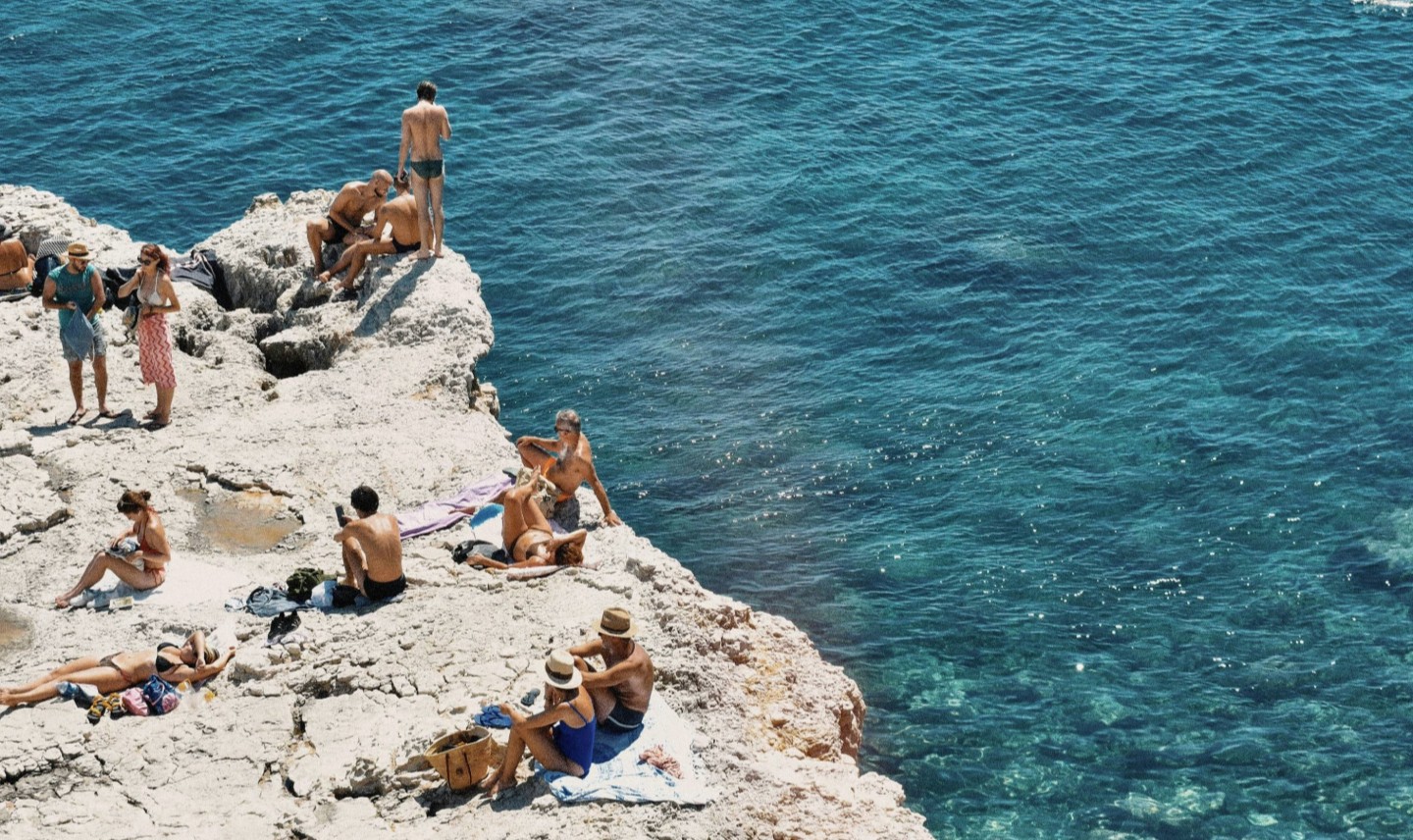
Cala Futadera opens up between high cliffs, with thick golden sand and the deep sea right at the shore. The bay's shape and water depth make it perfect for swimming or jumping in from the rocks. Seabirds are often seen nesting on the cliffs, and the deeper currents make it easy for larger fish to swim through this part of the Mediterranean. The cliffs, the open sea, and wildlife give the cove a special feel.

Sunscreen, sun-warmed rocks and turquoise waters
El Golfet, Calella de Palafrugell
Most visitors to Calella de Palafrugell stay on the main beaches near the village centre. El Golfet is just a short walk farther south, and the path there is easy to follow. This small distance makes a big difference.
It's one of those places where you will want to spend the whole afternoon. There are usually a few boats in the area, making it a nice place to enjoy from the water as well. If you have a snorkel, bring it along. Octopus, sea bream, and small schools of fish are attracted to the rocky seabed, especially in the morning or late in the day when the water is clear.

Wooden fishing boats, a clear blue sky and whitewashed walls by the sea
Sa Caleta, Cap de Creus
In the Cap de Creus Natural Park, in the far north of Costa Brava, the landscape changes. The land here is bare and open, shaped by the wind, and unlike anything else on the waterfront.
Sa Caleta is a rocky bay reached by a short drive and a walk. There is nothing here but nature: open sky, golden stone, the smell of wild herbs, and the wild feeling of standing at the very edge of the land. This part of the coast is known for its marine life, and you might spot dolphins swimming further out on certain days.

A landscape shaped by wind and sea
The rocks below Far de Sant Sebastià, Llafranc
To be honest, this is not a beach at all. It is a swimming spot that most people walk right past. Visitors admire the view from the Sant Sebastià lighthouse path above Llafranc and then continue walking. Those who find their way down to the water's edge are rewarded with the entire shoreline stretching south towards Palamós.
Just the sea, the smooth rock beneath you, and a side of this coast that most only ever see from above.

Boats anchored in a hidden cove along Costa Brava
THE COAST IS WAITING
Costa Brava is a coastline best enjoyed slowly, either by taking the coastal paths rather than the main road or by arriving by boat at a cove you had only seen on a map, where golden sands meet sculpted stone. Once you experience it, you'll understand why this stretch of Mediterranean coast has remained in the hearts of those who visit. The turquoise water, the hidden beaches, and the quiet magic of finding your own secret corner are waiting for you.